Man’s Search for Meaning
Published:
There are worse places to read a book about meaning than an exam hall, though not many that are more ironic. I got through most of Man’s Search for Meaning while invigilating IUT’s semester finals, which is a 3-hour long drag of pacing between rows, staring at ceiling fans, and watching a room full of young people being, quite literally, questioned by some of life’s most pointless questions. Frankl would have appreciated the staging. His central claim, it turns out, is that the questioning does not stop once you leave the examination room.
The seed, though, was planted earlier in one of Prof. Dr. Fazlul Haque Siddiqui sir’s Advanced Artificial Intelligence lectures. While teaching search algorithms, he said, “মানুষের life-টাই একটা search.” To me, that line landed with more philosophical gravitas than he probably intended. My mind immediately went to Frankl’s title. I had heard the book’s title many times and carried a mild, unhurried curiosity about it; that one line was enough to move it from the someday-pile into my hands. Or, more precisely, onto the department’s printer—which I unabashedly used to print the entire book, then bound by hand using a Japanese book-binding technique I’d only recently learnt.
What Frankl gave me, more than anything, was a name. There is a particular feeling I have met many times without ever managing to pin it down—distinct from happiness, from contentment, from satisfaction, satiation, or the easy slump of mere fulfilment. I felt it during the pandemic, of all times, working through Andrew Ng’s machine learning course. I feel it in the long, resolving climax of Pachelbel’s Canon in D. I feel it on finishing a piece of work (a project, an assignment, or even a Dota match) that demanded real diligence, and I feel it now, as a teacher, in the small moment when I manage to successfully convey a complex CS concept to my students. Frankl does not invent this feeling, but he isolates it cleanly, and insists, persuasively, that it is the thing we are actually after.
Frankl loses almost everything and pretty much everyone to the Holocaust, yet refuses to let suffering have the final interpretive authority over his life. The book does not romanticize suffering… of course that would be obscene. Rather, it argues that suffering can be survived, and sometimes even transformed, when it is tethered to a why. The line I keep returning to is his claim that “to life he can only respond by being responsible.” The surrounding passage makes the stronger point: life is not merely something we interrogate; it interrogates us, and our answer is given through the burdens we actually choose to bear.
This clarified something I have circled around since my early teens. I used to wonder what the purpose of suffering was. The celebrity-atheist types often presents unnecessary suffering as the strongest argument against the existence of God. Plausible, yes. Decisive, no. Like most arguments in that arena, it is serious, emotionally loaded, and still refutable enough to keep philosophers gainfully employed.
Around 2014, I came across a Holocaust-related line that stayed with me:
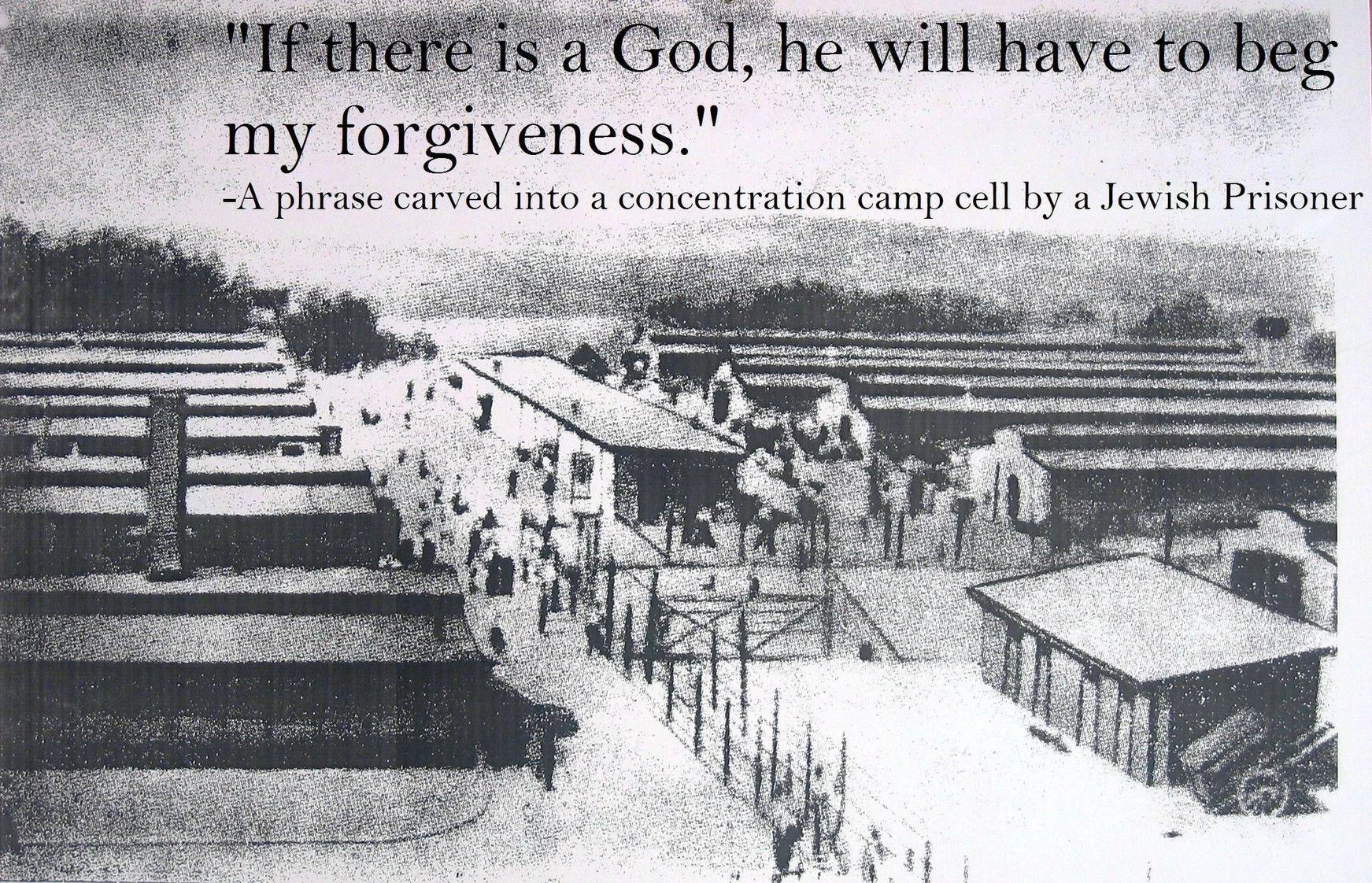
What fascinated me then, and still does, is how nations can emerge from historical catastrophe with a sharpened sense of purpose. The Jews, the Japanese, the Russians, the Chinese: different histories, different moral ledgers, but all examples of communities that endured tremendous rupture and later bounced back from rock-bottom. None of this is simple. History is rarely black and white; it is usually different shades if grey. Still, the pattern is difficult to ignore.
I see my Muslim brothers and sisters in great pain across the world today. Again, I won’t performatively pretend it is a story in black and white; it rarely is, only different shades of grey, with innocent people suffering as collateral whichever way the line is drawn. My hope is that the kind of post-traumatic growth Frankl describes may, by Allah’s mercy, manifest for people living through war, displacement, humiliation, and grief today.
The book reinforced an intuition that I’ve had for a while: meaning is not found by escaping burden, but by shouldering a worthwhile one. Schools rarely teach this effectively. Perhaps they can’t. It has to be lived, or at least seen, in the long corridor between pain and responsibility. Hopefully, everything has a point.